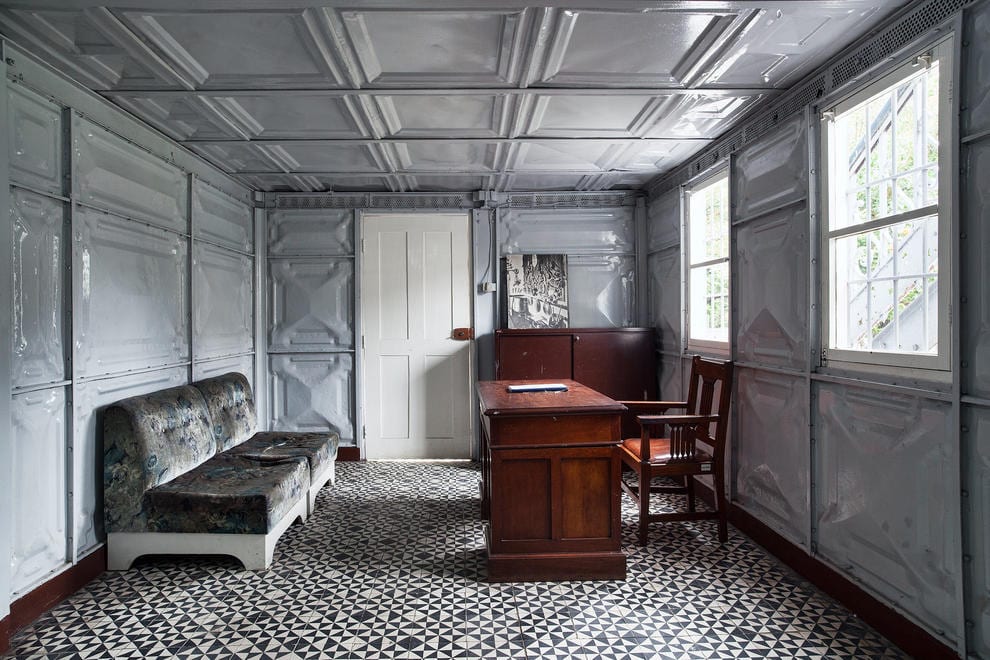
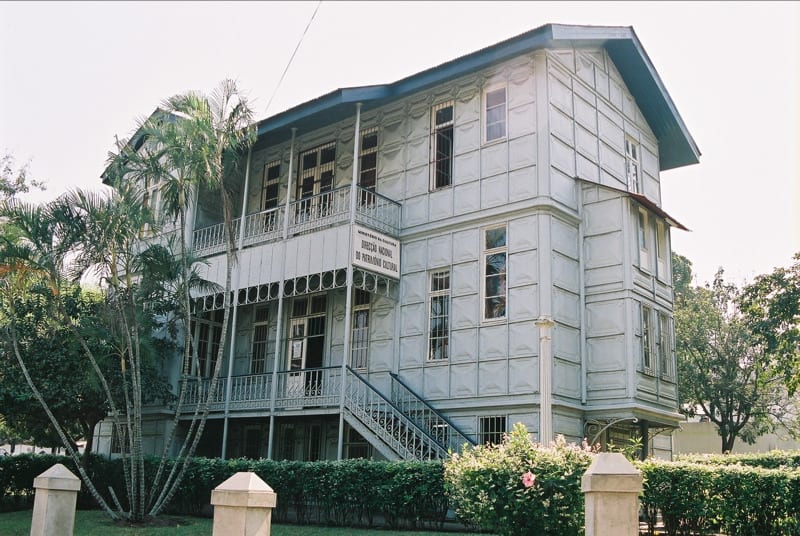
In the heart of uptown Maputo, nestled quietly next to the lush Tunduru Botanical Gardens and across from the stately French-Mozambican Cultural Center, sits one of the most eccentric, unusual architectural experiments in African history. It is a striking, two-story structure made entirely of pressed iron plates, complete with industrial rivets, sash windows, and an ornate, metallic porch. It looks entirely out of place in a subtropical coastal city.
This is the Iron House (Casa de Ferro). As a prominent fixture of Maputo’s architectural landscape, this building stands as a fascinating monument to colonial ambition, European design oversight, and the ultimate victory of the African climate over Western planning.
Who Designed the Iron House?
Unlike many of Maputo’s landmarks, the architectural pedigree of the Iron House is indisputable. This unique building was prefabricated in Europe in the late 1880s. It was designed in the workshops of Gustave Eiffel, the world-renowned French engineer whose innovative iron structures were taking the globe by storm during the late 19th century.
The building was commissioned by the Portuguese colonial government, who wanted a modern, prestigious residence to house the Governor-General of Lourenço Marques. The iron panels were forged in Belgium, meticulously packed into crates, and shipped across the oceans to the shores of Mozambique, where the structure was bolted together in 1892.
The Fatal Flaw: A Lesson in Tropical Climate
The Iron House was intended to be a symbol of European technological superiority and industrial progress. There was only one massive problem: the designers in Paris had completely failed to account for the tropical climate of Mozambique.
Iron is an exceptional conductor of heat. When the scorching mid-summer sun beat down on the metal roof and walls, the interior of the building transformed into a literal oven. Temperatures inside quickly soared past a suffocating 50°C (122°F). With no ventilation or air conditioning at the time, the building became completely uninhabitable. The Governor-General reportedly stepped inside the completed building once, realized it was an absolute furnace, and refused to ever live there. The grand imperial project was a magnificent, functional failure.
What Has the Iron House Been Used For?
Because it was far too hot to serve as a residence, the colonial government had to find alternative uses for Eiffel’s iron creation over the decades. It spent time housing a local school, served as a court building, and was used for various administrative offices during the winter months when the temperatures became slightly more bearable.
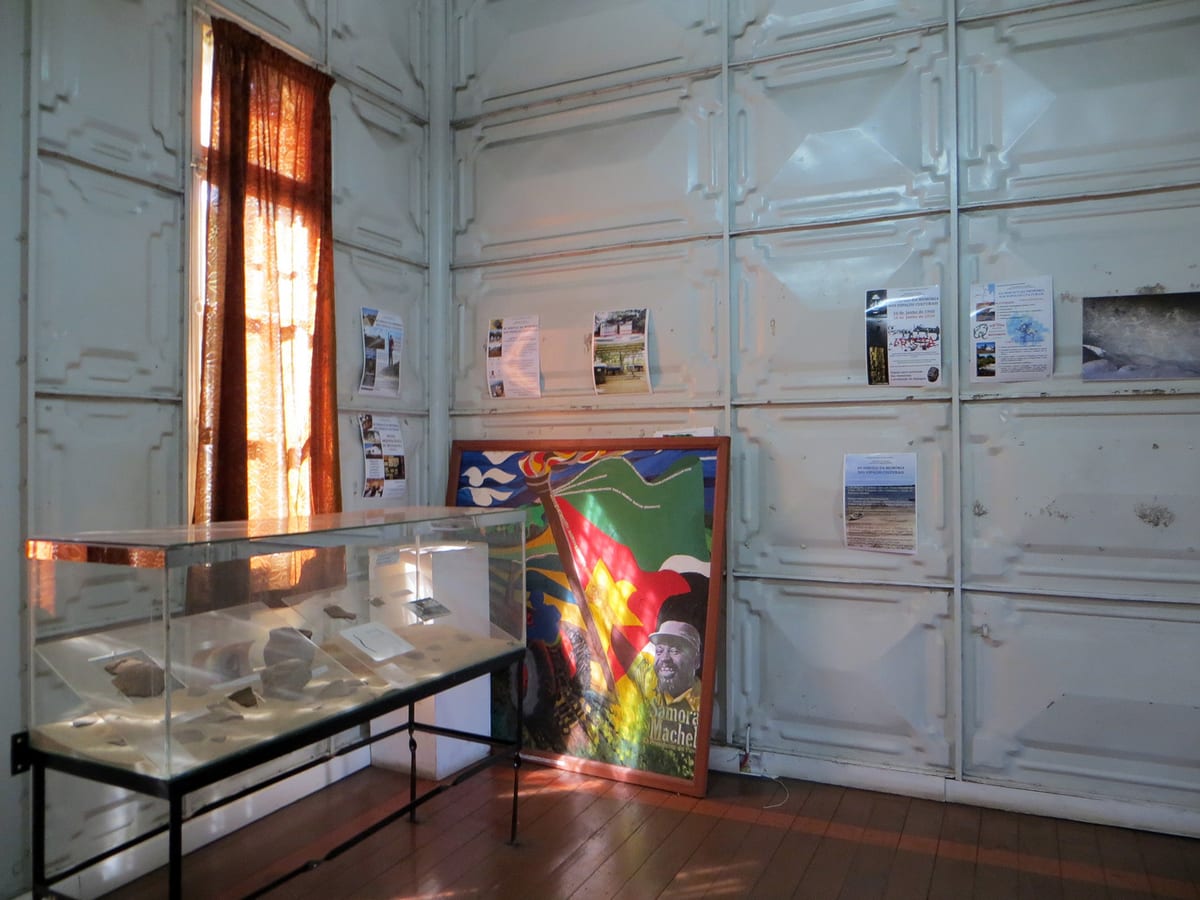
Following Mozambique’s independence in 1975, the building was reclaimed by the Ministry of Culture and Cultural Heritage. Today, it functions as a public museum and administrative office, housing a collection of archaeological artifacts, traditional pottery, and exhibits detailing the historic development of Maputo’s urban landscape.
Key Architectural Features to Look For
When you visit the Iron House today, it offers incredible opportunities for photography and close inspection:
- The Riveted Panels — Look closely at the exterior walls to see the heavy industrial rivets and seams where the iron plates connect, showcasing classic late-19th-century European industrial engineering.
- The Metallic Veranda — The second floor features an elegant balcony with decorative iron railings, designed to give the building a touch of residential charm despite its heavy industrial materials.
- The Eiffel Silhouette — From a distance, the sharp, clean geometric angles of the house subtly echo the industrial aesthetics found at the base of the Eiffel Tower or the internal structures of the Statue of Liberty.
See Maputo’s Hidden Gems with Nenane Tours
The Iron House is a classic stop on our Art and Architecture Tour at Nenane Tours. It serves as a brilliant reminder that every single structure in Maputo has a story to tell — sometimes a story of grandeur, and sometimes a story of comical historical miscalculations! Our expert guides will show you the best angles to photograph this metallic curiosity, walk you through its unusual history, and connect its story to the surrounding architectural monuments of the city center.