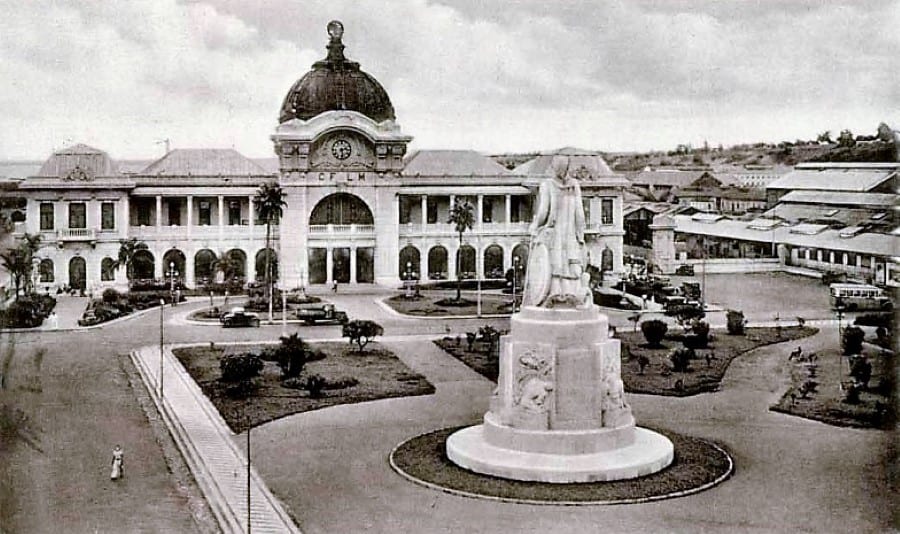
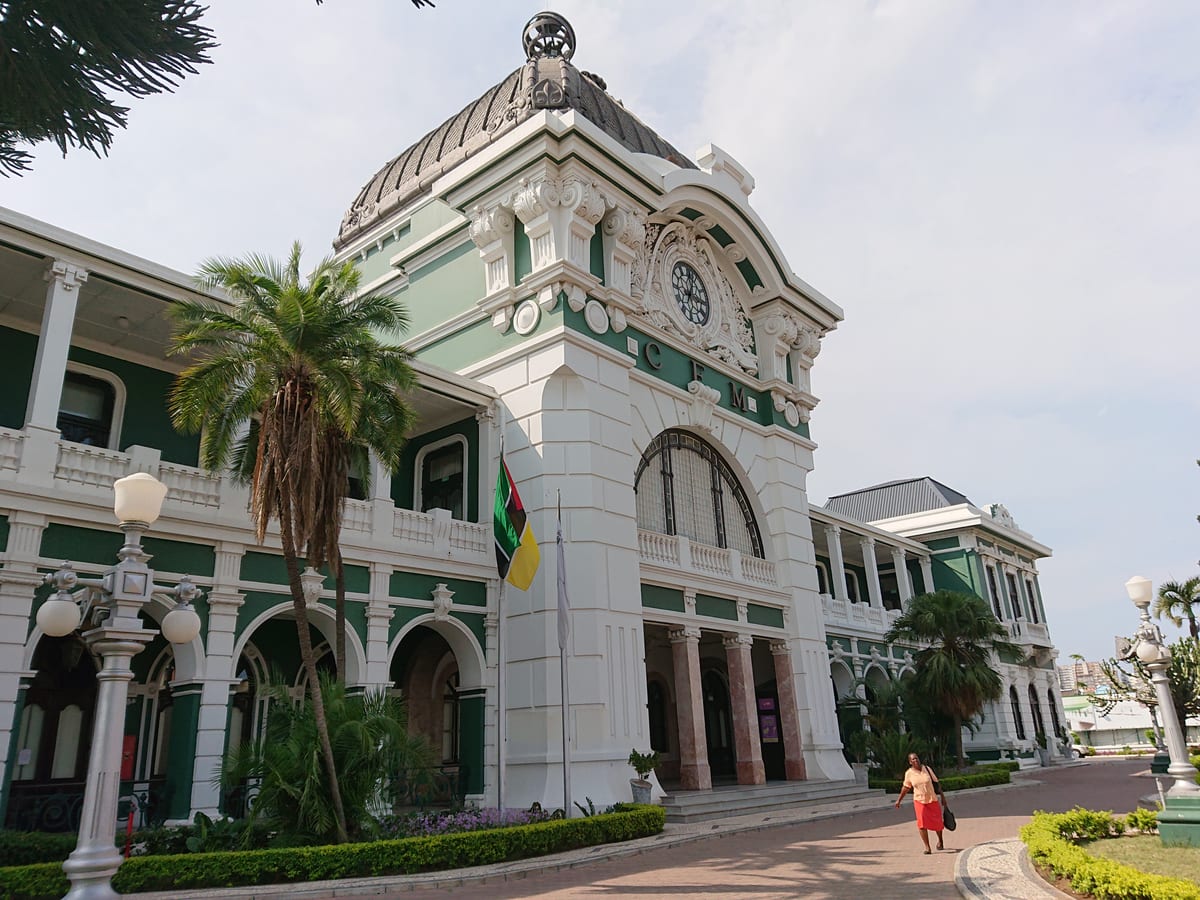
As you walk down Avenida Mártires de Inhaoma towards the bustling historic center of downtown Maputo, a majestic, mint-green building rises to meet you. Featuring a sweeping bronze dome, elegant columns, and intricate wrought-iron balconies, it looks like it belongs on the grand boulevards of Paris rather than a bustling East African port city.
This is the Maputo Central Railway Station (Estação Central dos Caminhos de Ferro). Frequently ranked by international travel authorities as one of the most beautiful train stations in the world, this building is a masterpiece of early 20th-century design. But beyond its stunning aesthetics, the station holds the stories of a young city establishing its place on the global stage.
When and Why Was It Built?
The story of the Maputo train station begins in the late 19th century. At the time, the city was still known as Lourenço Marques. Following the discovery of gold in the Witwatersrand region of South Africa, the Portuguese colonial government realized that the fastest, most efficient route to transport South African gold and minerals to international markets was through the natural harbor of Delagoa Bay in Mozambique.
To capitalize on this economic goldmine, construction began on a railway line linking Lourenço Marques to the South African border. The initial train station was a modest, functional wooden structure. However, as rail traffic exploded and the city officially became the capital of colonial Mozambique in 1898, the administration wanted a grand, monumental terminal that reflected the colony’s newfound wealth and imperial ambition. Construction on the current stone building began in 1908 and was officially inaugurated on March 19, 1910.
Did Gustave Eiffel Design It?
One of the most persistent urban legends surrounding the historical buildings of Mozambique is that the Maputo Central Railway Station was designed by Gustave Eiffel, the legendary French engineer behind the Eiffel Tower. While it is a fantastic story often repeated in old travel blogs, it is historically inaccurate.
The station was actually designed by a talented trio of Portuguese architects: Alfredo Augusto de Lima, Mario Veiga, and Ferreira da Costa. The confusion likely stems from the building’s striking, ornate ironwork and its massive pre-fabricated bronze dome, which was constructed in South Africa and shipped to Maputo. The industrial, elegant use of metal certainly mimics the French turn-of-the-century style, but the credit belongs entirely to Portuguese engineering and the local workers who brought the blueprints to life.
What Architectural Elements Should You Look For?
When you visit the station today, take your time to admire the intricate design details that make this building a classic example of Beaux-Arts architecture:
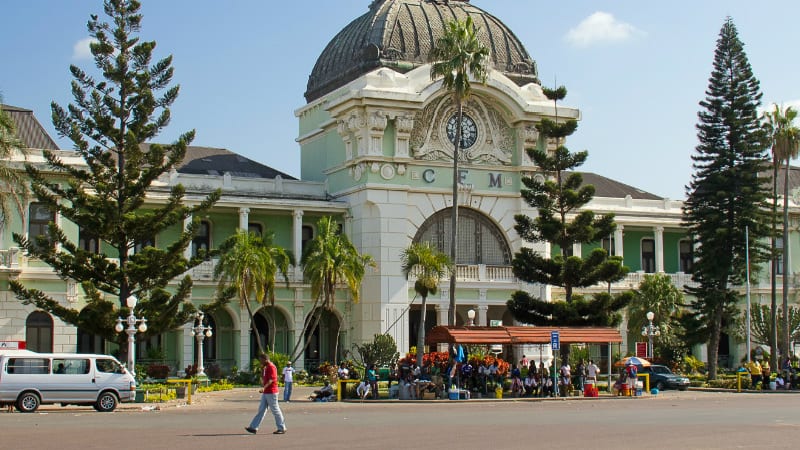
- The Symmetrical Facade — The exterior features a perfectly balanced layout with grand archways, classical pillars, and delicate cream-colored plaster reliefs contrasting against the pastel green walls.
- The Majestic Dome — The central bronze dome anchors the entire building, giving it an unmistakable, regal silhouette against the Maputo skyline.
- The Wrought-Iron Latticework — Walk out onto the train platforms to see the spectacular iron verandas, supportive pillars, and vintage clocks that make you feel as though you have stepped back into the golden age of rail travel.
- The Historic Steam Locomotives — Stationary on the tracks are beautifully preserved, turn-of-the-century steam engines, offering a fantastic look into the industrial history of East Africa.
The Station Today: A Living Cultural Hub
The Maputo Central Railway Station is far from a stagnant museum piece. Today, it serves as the active headquarters of the national port and railway company (CFM) and still operates passenger trains connecting Maputo to surrounding provinces. Furthermore, the station has transformed into a vibrant cultural space — the grand atrium and platforms regularly play host to art exhibitions, fashion shows, and live jazz concerts, blending colonial heritage with the cutting edge of modern Mozambican culture.
Experience the Station with Nenane Tours
The Maputo Central Railway Station is an absolute highlight of our Downtown Walking Tour at Nenane Tours. Standing on the historic platforms, our expert guides will take you beyond the beautiful architecture. We will share the stories of the economic rivalries that built the railway, the local laborers who maintained it, and how this building transitioned from a symbol of colonial extraction into a proud monument of independent Mozambique.